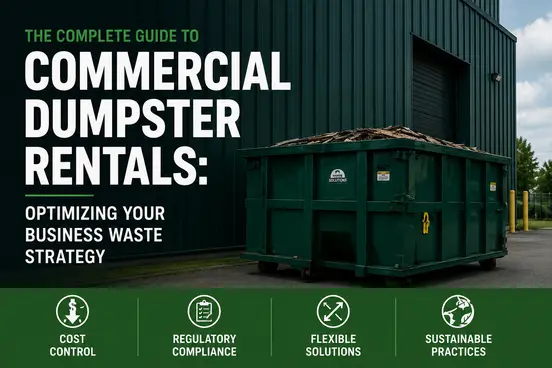
The Complete Guide to Commercial Dumpster Rentals: Optimizing Your Business Waste Strategy
Running a highly successful modern business requires meticulous attention to countless operational details, from managing employee payroll and optimizing supply chains to executing aggressive marketing campaigns. In the midst of this daily corporate whirlwind, standard commercial waste management is frequently relegated to a complete afterthought. However, the exact way a business handles its daily waste stream has a profound, direct impact on its overall profitability, strict regulatory compliance, and public brand perception. Overflowing trash bins, scattered debris in the parking lot, and foul odors not only drive away valuable customers but also instantly invite severe municipal fines and aggressive pest infestations. Establishing a highly reliable, perfectly scaled commercial dumpster rental strategy is the absolute foundational bedrock of a clean, safe, and highly efficient business environment.
Commercial waste management is fundamentally different—and vastly more complex—than residential trash collection. Businesses generate a staggering volume of debris at a highly accelerated pace. Furthermore, the precise nature of that waste fluctuates wildly depending entirely on the specific industry. A busy downtown restaurant generates hundreds of pounds of heavy, wet organic food waste daily, requiring entirely different containment solutions than a massive retail clothing store producing mountains of lightweight, highly recyclable cardboard packaging. Attempting to force a "one-size-fits-all" solution onto a complex commercial operation inevitably leads to expensive overflow fees, unsanitary property conditions, and massive logistical headaches for facility managers.
This extensive, expert-level guide is meticulously engineered to provide business owners, commercial landlords, and corporate facility directors with a complete blueprint for mastering commercial waste. We will thoroughly break down the critical operational differences between permanent front-load bins and temporary commercial roll-offs, explore highly specific waste strategies for diverse industries, and deeply demystify the complex logistics of proper container sizing, optimal pickup frequencies, and aggressive security measures. By proactively optimizing your commercial waste infrastructure, you fiercely protect your corporate bottom line and ensure your property remains a pristine, highly welcoming environment for your clients and staff.
Understanding the Infrastructure: Front-Load vs. Roll-Off Dumpsters
The commercial waste industry primarily utilizes two entirely distinct categories of heavy-duty containers. Selecting the correct type of dumpster dictates exactly how your waste is stored, how frequently it is hauled, and how it impacts your property's valuable footprint.
Permanent Front-Load Commercial Dumpsters
When you envision a standard business dumpster sitting securely in a concrete enclosure behind a grocery store or a massive apartment complex, you are picturing a commercial front-load dumpster. These are cubic-shaped, heavy-duty steel containers outfitted with highly durable plastic lids and slotted side channels. They are designed for permanent, long-term placement and are utilized to manage a business's everyday, ongoing municipal solid waste (MSW) and standard recycling.
Front-load dumpsters are emptied on a highly predictable, recurring schedule (e.g., once, twice, or up to six times a week). A specialized commercial garbage truck equipped with massive hydraulic prongs approaches the container, inserts the prongs into the side channels, lifts the entire dumpster over the cab of the truck, and completely inverts it, dumping the waste directly into the truck's rear compactor before setting the empty bin safely back on the ground.
Temporary Commercial Roll-Off Dumpsters
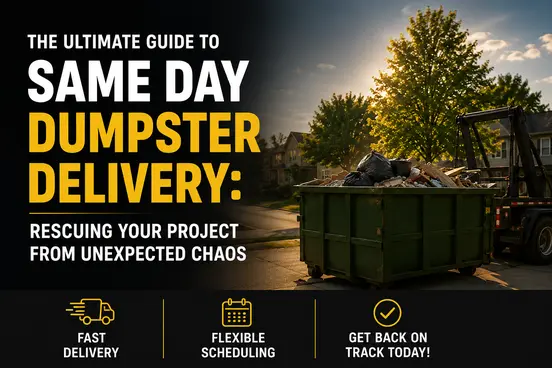
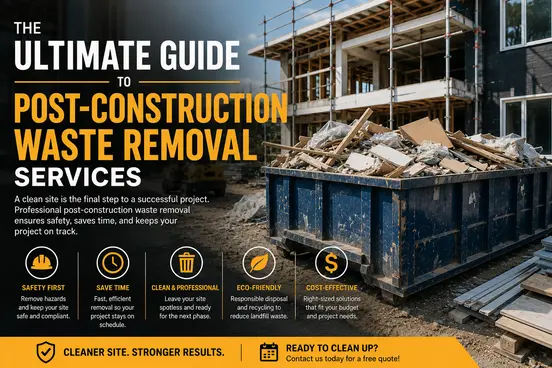
Conversely, roll-off dumpsters are open-top, highly elongated steel containers designed strictly for temporary, heavy-duty, high-volume projects. If your retail business is executing a massive interior remodel, your warehouse is purging thousands of pounds of obsolete inventory, or your commercial office is replacing its entire roof, a standard front-load bin will be instantly overwhelmed and physically cannot handle the weight of construction debris. In these specific, high-stakes scenarios, commercial facility managers must rent a heavy-duty roll-off container to handle the temporary surge in massive waste.
Sizing Your Commercial Front-Load Dumpster
For ongoing daily business operations, front-load dumpsters are universally measured in cubic yards, typically ranging from highly compact 2-yard bins to massive 8-yard containers. Accurately matching the container size to your specific business volume is critical to avoiding expensive overflow penalties or paying for unused air space.
2-Yard and 4-Yard Dumpsters: Compact and Efficient
A 2-yard dumpster is the absolute smallest commercial size available, holding roughly 12 to 15 standard trash bags. It is highly ideal for small boutique retail shops, independent coffee houses, or tiny professional offices (like a local accounting firm) with fewer than 10 employees. The 4-yard dumpster offers double the capacity (roughly 24 to 30 bags) and features a slightly higher profile. It is the gold standard for medium-sized retail stores, small urgent care clinics, and mid-sized corporate offices.
6-Yard and 8-Yard Dumpsters: Maximum Daily Capacity
When a business generates a massive amount of daily waste, the 6-yard and 8-yard containers become absolute necessities. A 6-yard bin holds approximately 36 to 45 bags and frequently features a sliding side door because the walls are too tall for employees to safely throw heavy bags over the top. The massive 8-yard dumpster is the largest standard front-load size, holding up to 60 bags of trash. These massive containers are strictly reserved for high-volume environments like large grocery stores, busy manufacturing plants, sprawling commercial real estate complexes, and massive corporate headquarters.
Industry-Specific Waste Solutions and Strategies
Waste is absolutely not a monolith. The specific industry your business operates in heavily dictates exactly what kind of waste you produce, how dense it is, and what strict environmental regulations apply to its legal disposal.
Restaurants and Food Service Operations
The restaurant and food service industry faces some of the most brutal waste management challenges on the planet. Food waste is incredibly heavy, highly wet, and highly prone to causing severe odor issues and massive pest infestations (rats, roaches, and flies) if not managed with ruthless efficiency. Restaurants typically require heavy-duty 4-yard or 6-yard dumpsters with highly secure, lockable lids. Furthermore, because food waste rots incredibly fast, restaurants frequently require high-frequency pickup schedules (three to five times per week) to maintain strict health code compliance and prevent the property from smelling like a landfill.
Retail and Shopping Centers
For retail spaces and shopping centers, the vast majority of the waste stream is highly bulky, incredibly lightweight corrugated cardboard from massive inventory shipments. If retail employees simply toss fully assembled cardboard boxes into an 8-yard dumpster, the container will fill up in a matter of hours with literal empty air. Retail facility managers must ruthlessly enforce strict box-breakdown policies. Additionally, large retail centers frequently benefit massively from establishing a dedicated, separate dumpster strictly for cardboard recycling, which drastically reduces their overall landfill disposal costs and aggressively supports corporate sustainability metrics.
Property Management and Multi-Family Housing
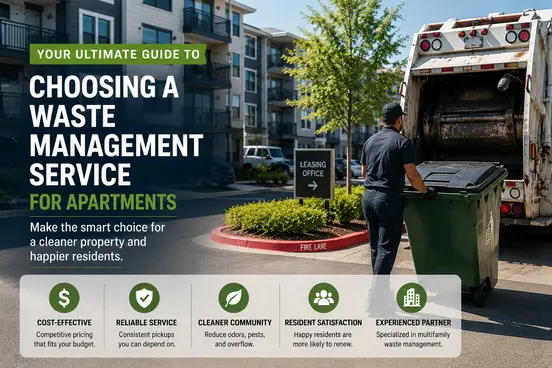
Managing waste for sprawling apartment complexes and massive condo associations is an entirely unique logistical beast. Property managers must strategically place multiple 6-yard or 8-yard dumpsters throughout the massive complex to ensure residents do not have to walk unreasonable distances to dispose of their trash (which inevitably leads to highly illegal dumping in the parking lot). Property managers must also constantly battle the issue of tenants illegally abandoning massive furniture (couches, mattresses) directly next to the dumpsters, which requires partnering with a rapid-response commercial junk removal service to keep the property pristine.
The Threat of Unauthorized Dumping and Container Security
One of the most highly frustrating, incredibly expensive realities of managing a commercial dumpster is the severe threat of "midnight dumping." Because commercial dumpsters are frequently located in dark, accessible parking lots, unscrupulous locals and shady contractors frequently drive onto your property in the dead of night and completely fill your expensive dumpster with their heavy residential trash, toxic tires, or massive construction debris.
Financial and Legal Ramifications
When a rogue contractor illegally dumps 2,000 pounds of heavy roofing shingles into your retail store's 4-yard dumpster, you are the one strictly held financially responsible. Your waste provider will aggressively hit you with massive weight overage fees, or the driver may legally refuse to empty the container entirely because construction debris is strictly banned from front-load trucks. You are then forced to pay a specialized junk removal crew to manually extract the illegal debris.
Aggressive Security Solutions
To fiercely protect your massive investment, facility managers must implement strict security protocols. The absolute most effective deterrent is requesting a dumpster equipped with heavy-duty lockable lids and providing keys exclusively to your trusted staff. Additionally, strategically installing highly visible, motion-activated floodlights and high-definition security cameras directly above the dumpster enclosure serves as a massive psychological deterrent to illegal dumpers and provides the critical video evidence required for local police to prosecute offenders.
Balancing Size vs. Frequency to Optimize Your Budget
Commercial dumpster pricing is deeply rooted in a mathematical formula balancing the physical size of the container against exactly how many days a week the truck arrives to empty it. Finding the ultimate "sweet spot" is the key to fiercely optimizing your operational budget.
The Mathematics of Commercial Waste
If your business currently possesses a massive 8-yard dumpster that is only being emptied once a week, but the container is consistently overflowing by Thursday afternoon, you have two primary options: you can increase the pickup frequency to twice a week, or you can order a second 8-yard dumpster. Conversely, if you have a 6-yard dumpster being emptied three times a week, but the container is only ever half-full when the truck arrives, you are actively burning money. You should immediately heavily downgrade the pickup frequency to twice a week or downgrade the container size to a 4-yard bin. Highly savvy business owners regularly audit their waste streams every six months, aggressively adjusting their container sizes and service schedules to perfectly match their current, fluctuating operational output.
Navigating Strict Environmental Compliance
Commercial businesses are held to vastly stricter environmental and municipal codes than private homeowners. Ignorance of local environmental law is absolutely not a valid legal defense when a municipal code enforcement officer writes a massive citation.
Strictly Prohibited Commercial Materials
Your commercial front-load dumpster is exclusively for standard municipal solid waste. You must heavily train your entire staff that they are strictly prohibited from throwing toxic, hazardous, or highly specialized commercial waste into the standard bin. This includes all forms of heavy e-waste (office computers, massive server racks, broken monitors), industrial chemicals, thousands of gallons of restaurant fryer grease, highly combustible solvents, and heavy construction debris. Tossing these items into a commercial bin poses a massive fire risk to the hauling truck and severely exposes your business to catastrophic environmental lawsuits.
Conclusion: Partnering for Operational Excellence
Mastering your commercial waste strategy is not merely a matter of keeping your parking lot clean; it is a highly critical, deeply strategic component of modern facility management that directly impacts your overall operational efficiency, your strict legal compliance, and your corporate bottom line. By proactively understanding the massive logistical differences between front-load and roll-off dumpsters, accurately matching your container size and pickup frequency to your specific industrial output, and fiercely protecting your bins from illegal dumping, you instantly transform a highly unpredictable, messy expense into a highly streamlined, predictable operational asset.
However, the ultimate success of your waste management strategy relies entirely on the strict reliability of the commercial partner you choose to execute it. You require a waste provider that acts as a true logistical partner—one who intimately understands the extreme, highly demanding nuances of your specific industry, guarantees on-time pickups so your business never grinds to a halt, and provides highly transparent, completely predictable billing without massive, hidden administrative fees.
By outsourcing this massive logistical burden to highly seasoned, deeply reliable commercial waste experts, you completely free yourself and your highly valuable management team from the chaotic headaches of property maintenance. You ensure your commercial facility remains a pristine, highly safe, and fiercely professional environment, empowering you to focus 100% of your energy exactly where it belongs: actively serving your customers and aggressively growing your business.
Is your business actively overpaying for inefficient, highly unreliable commercial waste services?
At First Priority Disposal, we specialize in providing highly reliable, deeply transparent commercial dumpster rentals tailored specifically to the unique, high-stakes demands of modern businesses. Whether you are managing a bustling retail center, directing a massive property management firm, or running a high-volume restaurant, our dedicated commercial accounts team will expertly analyze your specific waste stream and build a perfectly scaled, highly cost-effective service schedule that keeps your property pristine.
Stop letting terrible waste logistics completely disrupt your valuable operations. Visit firstprioritydisposal.com/services today to clearly view our comprehensive commercial solutions, secure a highly transparent quote, and upgrade your facility to a truly professional standard. Let our seasoned experts handle the massive heavy lifting.