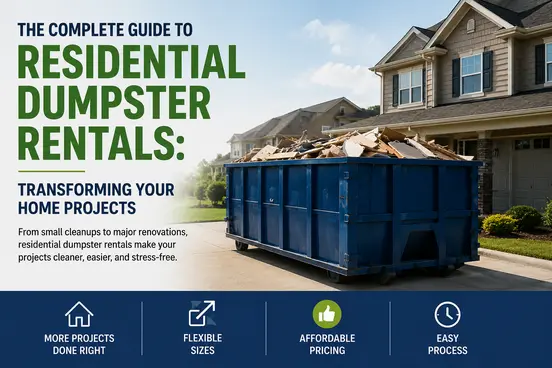
The Complete Guide to Residential Dumpster Rentals: Transforming Your Home Projects
Owning a home is a continuous journey of improvement, maintenance, and inevitable accumulation. Whether you have finally decided to gut that outdated master bathroom, clear out three decades of deeply entrenched basement clutter, or completely overhaul your backyard landscaping, one universal truth remains: massive home projects generate a staggering amount of waste. While standard municipal trash bins are perfectly adequate for weekly household refuse, they are woefully insufficient for handling the immense volume and sheer weight of construction debris, old furniture, and heavy yard waste. Attempting to manage a major residential project without a dedicated residential dumpster rental is a highly stressful logistical error that frequently results in damaged personal vehicles, entirely wasted weekends driving back and forth to the local dump, and highly frustrated neighbors.
For many homeowners, the concept of renting a massive steel roll-off dumpster can initially seem highly intimidating. Concerns about driveway damage, navigating complex municipal street permits, choosing the wrong size, or getting hit with massive hidden overage fees frequently cause homeowners to endlessly delay critical projects or resort to highly inefficient DIY hauling methods. However, when approached with the right knowledge and partnered with a highly reputable local provider, renting a residential dumpster is actually one of the easiest, most cost-effective, and deeply satisfying logistical steps you can take to guarantee the overall success of your home improvement endeavor.
This extensive, highly detailed guide is meticulously engineered specifically for homeowners. We will completely demystify the entire residential dumpster rental process from start to finish. We will explore exactly how to accurately estimate your waste volume, thoroughly explain the critical "Golden Rule" of container sizing, break down advanced cost-cutting strategies like strategic loading and optimal rental timing, and provide critical advice for fiercely protecting your property during delivery. By deeply mastering these essential logistics, you will confidently transform a chaotic, debris-filled nightmare into a highly streamlined, highly successful home upgrade.
Accurately Assessing Your Project: The Foundation of Success
The absolute first and most critical step in the entire dumpster rental process must happen long before you ever pick up the phone to request a quote. A successful rental relies entirely on a highly realistic, unflinchingly honest assessment of the exact debris you intend to throw away. Failing to accurately assess your waste stream inevitably leads to the logistical nightmare of a container that is completely full before the job is even half finished.
Evaluating Volume vs. Density
Homeowners frequently make the critical mistake of treating all waste exactly the same. However, waste management professionals view debris through two distinct lenses: sheer volume (how much physical space the items take up) and density (how incredibly heavy the items are). An attic cleanout consisting primarily of old cardboard boxes, clothing, and lightweight plastic toys produces high volume but incredibly low density. Conversely, tearing out a small patio generates broken concrete and heavy soil—creating incredibly low volume but massive, highly restricted density.
Understanding this crucial distinction dictates exactly how you approach your rental. If you are throwing away bulky, highly rigid items like old sofas, non-collapsible wooden dressers, or fully assembled kitchen cabinets, you must factor in "fluff" or dead air space. You cannot easily compress a solid couch like you can a pile of old carpet. Therefore, projects involving highly bulky items always require a significantly larger container to accommodate the wasted air space.
The Danger of Mixed Heavy Loads
If your home project involves incredibly heavy, "inert" materials—such as broken brick, roofing shingles, wet dirt, or concrete—you must explicitly inform your rental provider upfront. Because commercial roll-off trucks are strictly governed by Department of Transportation (DOT) highway weight limits, heavy materials frequently cannot be mixed with standard household trash, or they must be strictly confined to smaller 10-yard containers filled only halfway. Attempting to hide heavy concrete at the bottom of a massive 30-yard dumpster will result in a dangerously overweight truck that the driver legally cannot haul, leaving the dumpster stranded in your driveway until you physically unload the excess weight.
Selecting the Right Residential Dumpster Size
Dumpster capacity is universally measured in cubic yards (often simply referred to as "yards"). To easily visualize a single cubic yard, imagine a physical block roughly the exact size of a standard kitchen washing machine. Selecting the correct size is a delicate balancing act between your available driveway space and your total waste volume.
The 10-Yard Dumpster: Compact and Capable
Holding exactly 10 cubic yards of material (roughly equivalent to four full pickup truck beds), the 10-yard dumpster is the absolute favorite for minor residential projects. Its low side walls (typically only 3 to 3.5 feet high) make it incredibly easy to toss heavy items over the side without breaking your back. Because of its highly compact footprint, it easily fits into a standard single-car driveway.
Best suited for: Small bathroom gut-renovations, single-room cleanouts (like a small garage or messy basement), minor landscaping overhauls, and the exclusive disposal of highly dense materials like dirt or concrete.
The 15-Yard and 20-Yard Dumpsters: The Versatile Workhorses
The 15 and 20-yard containers represent the highly popular "middle ground" of residential rentals. A 20-yard dumpster holds roughly six to eight pickup truck loads of debris. While it offers double the capacity of a 10-yard bin, it frequently shares a very similar horizontal footprint, simply utilizing higher steel walls (around 4 to 4.5 feet tall) to achieve the extra volume. These sizes are the absolute standard for the vast majority of medium-to-large home improvement projects.
Best suited for: Complete kitchen remodels, massive deck removals, whole-home flooring replacements, large-scale garage cleanouts, and standard residential roof tear-offs (capable of holding up to roughly 3,000 square feet of asphalt shingles).
The 30-Yard Dumpster: For Major Residential Overhauls
When you step up to a 30-yard dumpster, you are tackling massive, highly invasive residential projects. Holding the equivalent of 9 to 12 pickup trucks, these massive containers feature high side walls (up to 6 feet tall), making the use of the swinging rear door absolutely critical for safe loading. They require a significant amount of wide-open driveway space for safe placement.
Best suited for: Major home additions, complete gutting of multiple rooms, whole-home window and siding replacements, and clearing out massive, heavily hoarded estates.
The Golden Rule of Sizing: Always Go One Size Larger
If you find yourself debating between two different container sizes, highly experienced professionals universally recommend following the "Golden Rule" of waste removal: always go one size larger. Homeowners almost universally underestimate exactly how much junk they actually have. It is significantly more cost-effective to pay a slightly higher base rate for a 20-yard dumpster with a little extra breathing room than to completely fill a 10-yard dumpster on day two and be forced to pay an entirely second rental fee and a second delivery charge to finish your project.
Navigating Pricing, Hidden Fees, and Weight Limits
Understanding exactly how you are being billed is critical to protecting your project budget. The residential dumpster industry primarily operates on flat-rate (bundled) pricing, but strict contractual rules apply.
Understanding Your Weight Allowance
A flat-rate price typically includes the delivery, a set rental period (e.g., 7 days), the final pickup, and a strict built-in weight allowance (e.g., 2 tons or 4,000 pounds). This allowance is highly crucial. When the truck picks up your loaded dumpster, it drives directly to a municipal landfill where the entire truck is driven onto a massive industrial scale. If your debris weighs exactly 3 tons, and your contract only allowed for 2 tons, you will be hit with a highly expensive "overage fee" for the extra 2,000 pounds. These fees vary wildly by geographic region but can easily exceed $100 per additional ton.
The Hidden Enemy: "Water Weight"
Roll-off dumpsters are entirely open to the sky. If you rent a dumpster during a rainy week, highly absorbent materials inside the bin—such as old carpeting, torn drywall, mattresses, and upholstered furniture—will soak up thousands of pounds of rainwater. This "water weight" is completely real, and you will absolutely be charged for it at the landfill scale. To aggressively protect your weight allowance, savvy homeowners invest in a cheap, heavy-duty tarp and securely cover the dumpster overnight or during heavy rainstorms.
Strategic Loading: Maximizing Your Investment
How you physically place items into the dumpster drastically impacts how much value you get out of the rental. Haphazardly throwing items over the side creates massive air pockets and wastes expensive space.
Breaking Down and Flattening
Never place a fully assembled cardboard box or a hollow wooden cabinet directly into the bin. Take the extra five minutes to violently break down all boxes with a utility knife, smash old wooden furniture flat with a sledgehammer, and cut long pieces of PVC pipe or lumber into shorter, more manageable pieces that stack tightly.
The "Tetris" Loading Method
Always begin loading by opening the heavy rear swinging door. Walk your absolute largest, heaviest, and bulkiest items (like old appliances or heavy dressers) directly into the belly of the dumpster and place them perfectly flat against the front wall. Work your way backward toward the doors, keeping the level of debris as perfectly flat and even as possible. Finally, use smaller, loose debris (like bags of trash or small yard waste) to fill in the gaps and air pockets between the larger items. This strategic "Tetris" method easily increases your usable capacity by up to 30%.
Protecting Your Property and Navigating Permits
A massive steel container rolling off a heavy commercial truck has the potential to severely damage residential property if not properly managed.
Driveway Protection and Clearances
Never allow a massive steel dumpster to be placed directly onto bare concrete, delicate pavers, or hot asphalt. Always mandate that the driver places thick wooden planks (typically 3/4-inch plywood) directly beneath the steel rollers to completely distribute the immense weight and prevent severe gouging or cracking. Furthermore, ensure the delivery path is entirely clear of low-hanging tree branches, electrical wires, and parked vehicles, as the delivery truck requires massive overhead clearance to safely tilt the bed upward.
Street Placement and Municipal Permits
If your driveway is too steep or too small, you may be forced to place the dumpster directly on the public street in front of your home. In almost every municipality across the country, placing a private dumpster on public property requires a highly specific "right-of-way" permit from the city's public works department. Failing to secure this permit before delivery will result in massive daily fines from local code enforcement. Always coordinate closely with your rental provider, as many highly professional companies will actively assist you in pulling the necessary permits.
Strict Prohibitions: What You Absolutely Cannot Throw Away
While dumpsters are incredibly convenient, they are legally bound by strict environmental protection laws. Placing banned items in your rental will result in the driver outright refusing to haul the container or the landfill assessing massive contamination fines.
Hazardous and Toxic Materials
You must never place toxic, corrosive, or highly flammable materials into a residential dumpster. This strictly includes liquid paints (dried paint is usually acceptable), motor oil, antifreeze, powerful chemical solvents, heavy lead-acid car batteries, highly volatile lithium-ion batteries, and highly dangerous asbestos-containing materials. These items require specialized disposal at a municipal hazardous waste facility to prevent catastrophic groundwater contamination.
Items Requiring Special Processing
Certain common household items require specialized processing and frequently trigger extra fees. Appliances containing Freon (like refrigerators and window AC units) cannot be dumped until the refrigerant is professionally evacuated. Heavy rubber tires are universally banned from standard landfills because they trap methane gas and destroy landfill caps. E-waste (televisions, computers) frequently must be diverted to specialized recycling centers. Always fully disclose these specific items to your provider before tossing them in.
Conclusion: Proactive Planning for a Pristine Finish
Renting a residential dumpster is the ultimate strategic maneuver for any serious homeowner preparing to tackle a major renovation, landscaping overhaul, or massive decluttering project. By aggressively abandoning the highly inefficient DIY approach of making dozens of exhausting trips to the local dump, you instantly reclaim your highly valuable time, fiercely protect your personal vehicles from severe wear and tear, and vastly accelerate the overall timeline of your home improvement goals.
The key to a completely flawless, deeply satisfying rental experience lies entirely in proactive, meticulous preparation. By taking the time to accurately estimate your true waste volume, strictly adhering to the Golden Rule of sizing up, fiercely protecting your weight allowance from hidden water weight, and employing smart, highly strategic loading techniques, you guarantee that your project remains completely on schedule and safely within your tightly managed budget.
Ultimately, transforming your living space should be an incredibly exciting, highly rewarding endeavor, not a stressful logistical nightmare buried under a growing mountain of dangerous debris. By partnering with a highly reliable, deeply communicative local waste management provider, you ensure that the only thing you have to focus on is perfectly executing your beautiful new renovation and rapidly enjoying the pristine, highly upgraded results of your hard work.
Ready to clear the clutter and conquer your next home project with absolute confidence?
At First Priority Disposal, we specialize in providing highly reliable, completely transparent residential dumpster rentals designed specifically for homeowners. Whether you need a highly compact 10-yard container for a weekend garage cleanout or a massive 30-yard bin for a whole-home renovation, our dedicated local team delivers exactly what you need, exactly when you need it, with absolutely zero hidden fees or confusing fine print.
Don't let massive debris completely derail your home improvement dreams. Visit firstprioritydisposal.com today to clearly view our comprehensive size guide, secure a highly transparent flat-rate quote, and rapidly schedule your hassle-free driveway delivery. Reclaim your space and let our seasoned experts expertly handle the massive mess.