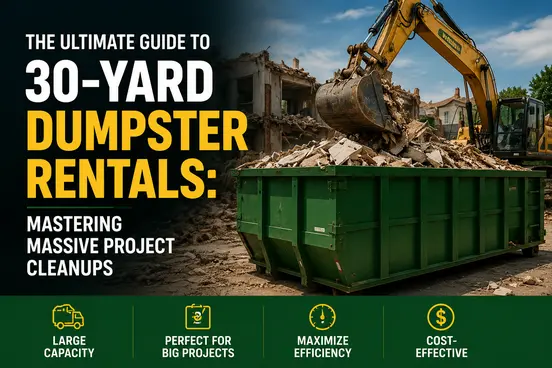
The Ultimate Guide to 30-Yard Dumpster Rentals: Mastering Massive Project Cleanups
There comes a distinct pivot point in property improvement and construction where standard waste disposal solutions completely fail. You have moved beyond the scope of a simple weekend garage cleanout or a minor half-bathroom remodel. You are now orchestrating a major architectural addition, executing a complete down-to-the-studs residential gutting, or managing the fast-paced daily flow of a commercial job site. When a project reaches this massive scale, the sheer volume of drywall, heavy timber, shattered glass, and bulky debris generated in a single afternoon can instantly overwhelm your workflow, create severe safety hazards, and bring your highly paid work crews to a grinding halt. To seamlessly manage this immense logistical burden, industry professionals and ambitious homeowners rely heavily on the undisputed heavyweight champion of temporary waste containment: the 30-yard dumpster rental.
The 30-yard roll-off dumpster represents a massive leap in containment capacity. It is specifically engineered to handle the brutal, high-volume realities of major construction and demolition (C&D) projects. However, renting a massive steel container of this magnitude is not a simple, plug-and-play transaction. The sheer physical size of the container demands careful spatial planning for your driveway or street. The immense height of its steel walls requires entirely different loading strategies than smaller dumpsters. Most importantly, the extreme volume it holds means you can very easily exceed strict federal highway weight limits if you do not deeply understand the complex physics of exactly what you are throwing away.
This highly extensive, deep-dive guide is meticulously engineered to provide you with expert-level knowledge on successfully integrating a 30-yard dumpster into your massive project. We will thoroughly break down the precise dimensions and volumetric capacity of the container, define the exact types of projects where it shines, and completely demystify the dangerous logistical traps—like hidden "water weight" and inert material restrictions—that frequently cost novice renters hundreds of dollars in entirely avoidable overage fees. By mastering the intricate details of a 30-yard rental, you will guarantee a highly streamlined, deeply safe, and wildly successful project execution.
Visualizing the Capacity: Exactly How Big is a 30-Yard Dumpster?
Before committing to a rental contract, it is absolutely essential to accurately visualize exactly what you are ordering. The term "30-yard" strictly refers to the volumetric capacity of the container—meaning it holds exactly 30 cubic yards of physical material. To put this massive volume into perspective, a single cubic yard is roughly the exact physical size of a standard kitchen stove. Therefore, a 30-yard dumpster can hold the equivalent of 30 standard kitchen stoves.
Physical Dimensions and Footprint
While exact dimensions can vary slightly depending on the specific manufacturer used by your waste provider, the industry-standard physical footprint of a 30-yard roll-off dumpster is incredibly large. They typically measure 22 feet in length, 8 feet in width, and possess towering side walls that are 5.5 to 6 feet high. Because of this massive 22-foot length, placing this container requires a highly significant amount of dedicated, wide-open real estate on your property.
The Pickup Truck Equivalent
The most highly effective way to visualize this massive capacity is through the "pickup truck metric." A standard, full-size pickup truck bed holds roughly 2.5 to 3 cubic yards of debris when filled level to the brim. A fully loaded 30-yard dumpster effortlessly contains the exact equivalent of 9 to 12 fully loaded pickup truck beds. By ordering this single container, you are instantly saving yourself and your crew roughly a dozen exhausting, time-consuming round trips to the municipal landfill, reclaiming dozens of highly valuable billable hours.
The Critical Importance of the 6-Foot Walls
The most defining physical characteristic of the 30-yard dumpster is its extreme wall height. At 6 feet tall, the walls are frequently taller than the workers loading the container. Attempting to manually lift heavy chunks of demolition debris, solid oak cabinets, or waterlogged carpeting over a 6-foot steel wall is not only physically exhausting, it is a massive ergonomic hazard that frequently results in severe shoulder tears and lower back injuries. Therefore, understanding how to properly utilize the heavy-duty swinging rear door is absolutely mandatory for this specific size category.
Ideal Deployments: When is a 30-Yard Dumpster the Right Choice?
Because you are paying for massive volume, you must ensure your project actually generates enough debris to justify the expense. The 30-yard container is explicitly designed for large-scale, highly invasive projects.
Major Residential Renovations and Additions
If you are completely gutting the entire first floor of a home, tearing down multiple interior load-bearing walls, or building a massive new architectural addition, the 30-yard dumpster is your absolute gold standard. It easily accommodates the massive, awkward volume of hundreds of 16-foot framing studs, massive piles of shattered drywall, torn-out plumbing fixtures, and miles of old electrical wiring generated during a heavy residential gutting.
Commercial Construction and Office Build-Outs
In the commercial sector, the 30-yard dumpster is an everyday necessity. When a new retail tenant takes over an empty "vanilla shell" storefront and begins a massive interior build-out, or when an office space is entirely reconfigured from a cubicle maze to an open-concept layout, massive volumes of commercial carpeting, steel framing, ceiling tiles, and heavy packaging materials from new fixtures are generated daily. The 30-yard container provides the essential, heavy-duty infrastructure required to keep the commercial job site moving at a highly profitable speed.
Massive Estate Cleanouts and Hoarding Situations
When liquidating a massive estate after a loved one passes, or when attempting to remediate a severe residential hoarding situation, the sheer volume of accumulated household goods is frequently staggering. Decades of stored cardboard boxes, entirely broken furniture sets, massive appliances, and endless bags of clothing take up massive amounts of highly inefficient "fluff" space. The 30-yard dumpster is highly favored for these deeply emotional cleanouts because its massive volume allows crews to rapidly clear the property without constantly waiting for smaller dumpsters to be swapped out.
Whole-Home Exterior Overhauls
Replacing the entire exterior siding of a large home, tearing out dozens of old wooden windows, or completely replacing a massive residential deck easily justifies a 30-yard rental. Furthermore, for massive roofing projects, a 30-yard container can safely hold the debris from a deeply extensive roof tear-off, accommodating up to roughly 4,000 to 5,000 square feet of single-layer asphalt shingles.
The Physics of Waste: Volume vs. Weight Limits
The absolute most frequent, incredibly expensive mistake renters make with 30-yard dumpsters is conflating volume with weight. Just because a 30-yard dumpster possesses the physical space to hold 30 cubic yards of material does absolutely not mean it can legally or mechanically hold 30 cubic yards of *any* material.
Understanding the 30-Yard Weight Allowance
Every commercial roll-off truck is strictly governed by a Gross Vehicle Weight Rating (GVWR) enforced by the Department of Transportation (DOT). To ensure the truck does not illegally exceed highway weight limits, waste management providers bundle a specific "weight allowance" into your flat-rate rental fee. For a massive 30-yard dumpster, this built-in weight allowance is typically 3 to 5 tons (6,000 to 10,000 pounds), depending entirely on your local market and the specific provider.
When your completely loaded dumpster is hauled away, the driver must drive the entire truck onto a highly calibrated, massive industrial scale at the local landfill. If your rental agreement allowed for 4 tons, but your debris weighs exactly 6 tons, you will immediately be hit with a highly expensive, prorated "overage fee" for that extra 2 tons of weight. These overage fees frequently range from $60 to well over $150 per ton, rapidly destroying a carefully planned project budget.
The Danger of "Inert" Heavy Debris
Because the 30-yard dumpster is so incredibly large, it is highly susceptible to severe overloading. You must never attempt to fill a 30-yard dumpster with highly dense, "inert" materials such as poured concrete, red brick, wet soil, gravel, or thick asphalt. A single cubic yard of solid concrete weighs roughly 4,000 pounds. If you filled a 30-yard dumpster even halfway with concrete, it would weigh over 60,000 pounds. The truck's hydraulic winch would physically snap attempting to lift it, and if it could lift it, the truck would instantly shatter DOT axle weight limits.
If your massive project strictly involves heavy masonry or massive earth excavation, you are legally required to use highly specialized "heavy haul" 10-yard or 15-yard dumpsters designed explicitly for dense weight, rather than volumetric space.
The Hidden Enemy: "Water Weight"
Roll-off dumpsters do not possess lids. If your 30-yard dumpster is sitting in your driveway during a massive, multi-day rainstorm, highly absorbent demolition materials—such as deeply pulverized drywall, thick home insulation, old mattresses, and massive rolls of carpeting—will soak up thousands of pounds of rainwater like a massive sponge. This "water weight" is completely real, and you will absolutely pay for it when the truck crosses the landfill scale. Highly savvy project managers aggressively combat this hidden expense by purchasing a massive, heavy-duty tarp and securely tying it over the top of the dumpster whenever rain is in the forecast.
Preparing Your Job Site for a Massive Delivery
A commercial roll-off transport truck carrying a 22-foot steel container is an incredibly massive piece of heavy machinery. Successfully navigating this equipment onto a residential driveway or a tightly packed commercial job site requires highly meticulous, proactive logistical preparation.
Spatial Requirements and Overhead Clearances
You must carefully account for the physical footprint of the delivery truck, not just the dumpster itself. To safely back up and slowly roll a 22-foot container off the hydraulic bed, the commercial driver typically requires a minimum of 50 to 60 feet of perfectly straight, entirely unobstructed clearance. Furthermore, because the hydraulic truck bed tilts upward at a steep 45-degree angle during the precise moment of delivery, the driver requires a strict minimum of 22 to 25 feet of completely clear vertical overhead space. You must aggressively scan your intended placement area and completely ensure there are no low-hanging municipal power lines, delicate telephone wires, or massive tree branches directly above the drop zone.
Fiercely Protecting Your Driveway
A 30-yard steel dumpster is incredibly heavy, even when entirely empty. When you begin filling it with tons of demolition debris, the immense, concentrated pressure pressing down on the four steel wheels or metal skids can easily crack standard concrete driveways, deeply gouge hot summer asphalt, or completely destroy delicate custom brick pavers. To absolutely prevent this catastrophic property damage, you must mandate that large sheets of thick, 3/4-inch plywood be placed directly beneath the exact locations where the heavy steel rollers will rest. This highly effective technique evenly distributes the immense weight across a much wider surface area, perfectly protecting your valuable infrastructure.
Navigating Municipal Street Permits
If your residential driveway is too short (under 22 feet), pitched at an incredibly steep angle, or structurally unsound, you may be entirely forced to place the massive container directly on the public street in front of your property. In almost every major city and municipality across the country, placing a private commercial dumpster on a public roadway requires a highly specific, paid "right-of-way" or "street occupancy" permit from the local public works or transportation department. Failing to aggressively secure this permit before the delivery truck arrives will instantly result in massive daily fines from local code enforcement, and the driver will legally refuse to drop the container. Always coordinate heavily with your provider regarding these strict municipal requirements.
Strategic Loading Techniques for High-Walled Containers
How you physically place debris into a 30-yard dumpster dictates exactly how much overall financial value you extract from your rental. Haphazardly throwing items over the wall creates massive, highly expensive air pockets.
The Absolute Necessity of the Swinging Door
Because the side walls are 6 feet tall, you must utilize the heavy-duty swinging rear door for the vast majority of the loading process. Before the delivery driver leaves, absolutely ensure you know exactly how to safely unlatch and secure the heavy steel door. Always walk your absolute largest, heaviest, and bulkiest items (like massive refrigerators, solid wooden doors, or heavy cast-iron bathtubs) directly into the front belly of the dumpster, placing them perfectly flat on the steel floor. By keeping the massive weight low and pushed toward the front (the end closest to the truck cab), you ensure the container is perfectly balanced and highly safe for highway transport.
Aggressive Deconstruction and the "Tetris" Method
Never waste expensive volumetric space by throwing fully assembled, highly hollow items into the bin. Take the extra ten minutes to aggressively smash old hollow cabinets flat with a sledgehammer, violently break down massive cardboard appliance boxes with a utility knife, and use a reciprocating saw to cut incredibly long, awkward pieces of framing timber or PVC piping into shorter, densely stackable segments. Work your way strictly from the front of the container to the rear doors, packing the debris as tightly and as level as possible, exactly like playing a high-stakes game of Tetris. Use smaller, loose items (like bags of standard trash or loose drywall chunks) to perfectly fill in the tiny air gaps between larger items. This highly strategic method will easily increase your total usable container volume by up to 30%.
Environmental Regulations: What Belongs in a 30-Yard Dumpster?
While 30-yard containers are the ultimate tool for heavy demolition, they are completely bound by strict state and federal environmental protection laws. Placing illegally banned items in your rental will result in the driver outright refusing to haul the load, or the landfill assessing massive, punitive contamination fines.
Universally Accepted Debris
Standard C&D debris is widely and enthusiastically accepted. This entirely includes all framing wood, broken drywall, roofing materials, architectural glass, residential and commercial flooring, cabinetry, standard household junk, old furniture, and non-hazardous scrap metals (copper, steel, aluminum). Most reputable waste providers actively route these massive loads to specialized sorting facilities where valuable metals and wood are heavily recycled, keeping them out of traditional landfills.
Strictly Prohibited Hazardous Materials
You must heavily enforce a strict policy on your job site that no toxic, highly corrosive, or highly flammable materials are ever placed in the container. This strictly includes liquid paints and highly volatile lacquers, industrial chemical solvents, heavy motor oil, antifreeze, highly dangerous lithium-ion batteries, massive lead-acid car batteries, completely full pressurized propane tanks, and any older architectural materials known to contain toxic asbestos. These items require highly specialized remediation and must be transported directly to a dedicated municipal hazardous waste facility to prevent catastrophic environmental damage.
The Gray Area of Specialized Processing
Certain common items frequently trigger specialized processing fees. Massive household appliances containing Freon (such as deep freezers, refrigerators, and window AC units) absolutely cannot be crushed in a landfill until the highly toxic refrigerant is professionally evacuated by a licensed technician. Heavy rubber tires are universally banned from standard landfills because their hollow shape traps naturally occurring methane gas, causing them to physically float to the surface and completely destroy massive landfill soil caps. E-waste (like massive CRT televisions and computer monitors) must be aggressively diverted to dedicated e-waste recycling centers due to toxic heavy metals. Always heavily disclose these specific items to your provider before tossing them in.
Conclusion: Elevating Your Project Efficiency
Renting a massive 30-yard dumpster is the ultimate highly strategic maneuver for any serious contractor or ambitious homeowner actively preparing to tackle a highly invasive, large-scale project. By proactively securing a centralized, massive-capacity containment system from day one, you instantly completely eliminate the severe trip hazards, deeply costly labor inefficiencies, and massive liability risks associated with disorganized, sprawling piles of heavy job site debris. It allows your highly paid tradesmen and dedicated crews to focus 100% of their valuable energy entirely on building, repairing, and progressing the project forward.
However, seamlessly leveraging a container of this massive magnitude requires strict adherence to logistical realities. By taking the highly critical time to accurately prepare your site for a massive delivery truck, completely understanding the deeply important legal limits of transportation weight versus volumetric capacity, fiercely protecting your heavy load from hidden water weight, and mastering advanced, strategic loading techniques, you effectively neutralize one of the most unpredictable, highly expensive variables in major project management.
Ultimately, partnering with a highly reliable, deeply transparent, and highly communicative local waste management provider guarantees that the entire massive logistical burden is lifted directly off your shoulders. With the staggering volume of debris handled safely, legally, and highly efficiently, you are completely free to drive your massive renovation or commercial build to a beautiful, highly successful, and perfectly on-budget conclusion.
Are you ready to secure massive containment for your next major project?
At First Priority Disposal, we specialize in providing highly reliable, completely transparent 30-yard dumpster rentals engineered specifically to handle the extreme demands of major residential renovations and fast-paced commercial construction sites. Our massive fleet of heavy-duty trucks and deeply dedicated local dispatch team ensure you possess the exact massive capacity you need, safely delivered exactly when your strict schedule demands it, with absolutely zero hidden fees or confusing fine print.
Do not let a massive mountain of dangerous debris completely derail your project timeline or destroy your budget. Visit firstprioritydisposal.com/services today to clearly view our comprehensive commercial solutions, secure a highly transparent, flat-rate quote, and rapidly schedule your hassle-free 30-yard delivery. Partner with the true local waste experts, and let us expertly handle the massive heavy lifting.