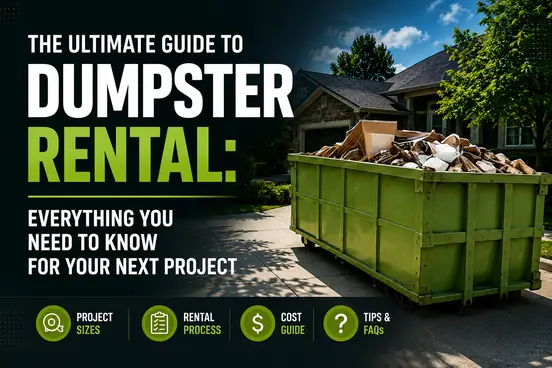
Embarking on any major project—be it a massive home renovation, a commercial construction build, or a comprehensive estate cleanout—requires meticulous planning. While most of the focus is understandably placed on design, materials, and labor, one of the most critical elements of a successful project is often relegated to an afterthought: waste management. Effectively and efficiently handling the immense volume of debris generated by these projects is paramount not only for maintaining a safe, hazard-free workspace but also for ensuring that your project remains strictly on schedule and safely within budget. Partnering with a reliable dumpster rental service provides the foundational infrastructure necessary to keep your job site clean and compliant with evolving local regulations.
Unfortunately, the complexities of dumpster rental are frequently underestimated. Many homeowners and novice contractors wait until construction debris, torn-up drywall, and broken fixtures have piled up dangerously high on their property before realizing they desperately need a heavy-duty disposal solution. This reactive, last-minute approach invariably leads to costly project delays, significant safety hazards for workers and residents, and unexpected premium expenses if the wrong size or specific type of dumpster is ordered in a rush. By taking the time to thoroughly understand the ins and outs of the dumpster rental industry—ranging from precise sizing and legal weight limits to strictly prohibited items and complex delivery logistics—you can proactively manage your waste stream and prevent a minor oversight from turning into a logistical nightmare.
This extensive, deep-dive guide is designed to walk you through every single critical aspect of renting a dumpster. We will thoroughly explore the different types of waste containers available on the market, dissect the mathematical process of accurately estimating the exact cubic yardage you need, explain the nuances of standard industry pricing models, and provide highly actionable, expert-level tips for loading your rented dumpster safely and efficiently. By the time you reach the end of this comprehensive resource, you will be fully equipped with the knowledge necessary to navigate your next waste removal project with absolute confidence, ensuring an outcome that is both environmentally responsible and highly cost-effective.
Understanding the Foundational Basics of Dumpster Rental
Before we dive deep into the specifics of varying container sizes and the complexities of pricing structures, it is absolutely essential to understand exactly what a modern dumpster rental entails and the distinct categories of equipment available to you. Not all dumpsters are created equal, and selecting the correct style of waste container for your specific application is the non-negotiable first step toward executing a successful waste management strategy.
What Exactly is a Roll-Off Dumpster?
The most prevalent type of dumpster utilized for temporary, project-based needs—such as residential home renovations, complete roof tear-offs, landscaping overhauls, and commercial construction jobs—is known as the "roll-off" dumpster. The term "roll-off" is derived directly from the mechanical method by which the container is delivered to your property and subsequently removed. Specialized, heavy-duty commercial trucks equipped with hydraulic lifting beds and powerful cable winches are used to transport these massive steel containers. When the delivery truck arrives at your designated site, the hydraulic bed slowly tilts upward at a steep angle, and gravity, combined with the cable system, allows the dumpster to literally roll off the back of the truck along built-in heavy steel wheels or metal skids. It comes to a safe, controlled rest on your driveway, parking lot, or unpaved job site.
Roll-off dumpsters are visually characterized by their long, rectangular footprint and an entirely open-top design. This open-top architecture is highly intentional; it allows for the incredibly easy disposal of large, awkward, and bulky items such as old furniture, broken appliances, and massive chunks of heavy construction debris. Furthermore, the vast majority of roll-off dumpsters feature a heavy-duty swinging door located at the rear end of the container. This swinging door is an incredibly useful ergonomic feature, as it allows workers to literally walk heavy, dense debris directly into the belly of the container rather than forcing them to attempt to lift back-breaking weight over the high steel side walls. This drastically reduces the risk of physical strain, muscle tears, or other severe injuries during the strenuous loading process.
These specific containers are rented out strictly on a temporary basis. A standard rental contract usually covers a period of seven to fourteen days, depending on the provider, though these rental periods can almost always be extended for an additional daily or weekly pro-rated fee if your project hits unexpected delays. Once you have finished filling the dumpster to the fill line, or your contracted rental period officially expires, the waste management company dispatches a driver to return to your site, winches the heavy, loaded dumpster back onto their hydraulic truck, secures the load with a heavy tarp to comply with highway laws, and hauls your waste away to the appropriate municipal landfill, specialized recycling center, or local waste transfer station.
Distinguishing Between Roll-Off and Commercial Front-Load Dumpsters
A common point of confusion for first-time renters is failing to distinguish between temporary roll-off dumpsters and permanent commercial dumpsters. If you own or operate a retail business, manage a busy restaurant, or oversee a large apartment complex, you are undoubtedly familiar with commercial front-load dumpsters. These are the smaller, cubic-shaped steel containers equipped with heavy plastic lids that sit permanently in a dedicated enclosure behind a commercial building. They are emptied on a highly regular, recurring schedule—often once, twice, or even three times a week—by a standard garbage truck equipped with hydraulic prongs on the front that lift the container over the cab of the truck to empty the contents into the compactor.
While these permanent front-load dumpsters are absolutely perfect for handling everyday, lightweight municipal solid waste (such as tightly bagged trash, food waste, and standard broken-down cardboard recyclables), they are entirely inadequate and frequently illegal to use for heavy construction debris or large-scale residential cleanouts. They simply cannot handle the immense, concentrated weight of dense materials like cracked concrete, wet soil, or asphalt roofing shingles. Furthermore, their enclosed, lidded design actively prevents the disposal of large, bulky items like a discarded sofa or a broken refrigerator. If you are undertaking a specific, time-bound project that is guaranteed to generate a massive volume of abnormal waste over a short period, a temporary roll-off dumpster rental is not just a recommendation—it is the required, logistical solution.
The Critical Process of Choosing the Right Dumpster Size for Your Project
Selecting the correct dumpster size is, without a doubt, the single most critical decision you will make in the entire rental process. Rent a container that is far too small for your needs, and you will inevitably find yourself forced to pay for a second (or even third) rental period and incur an additional, expensive delivery fee to handle the overflow. Conversely, rent a container that is far too large for your actual debris output, and you will waste a significant amount of your project budget paying for literal empty space. Roll-off dumpsters are universally measured in "cubic yards," which is a volumetric measurement referring to the exact amount of space inside the container. To visualize this, one single cubic yard is roughly equivalent to the physical size of a standard, kitchen-sized oven or washing machine.
10-Yard Dumpsters: The Perfect Solution for Small Cleanouts and Heavy Debris
A 10-yard dumpster is typically the smallest roll-off container available from commercial waste providers. It holds exactly 10 cubic yards of debris, which translates to roughly the same volume as three or four fully loaded, full-size pickup truck beds. These specific dumpsters are generally built quite low to the ground—often with side walls that are only about three feet high—making them exceptionally easy to load heavy items over the sides without needing to walk them through the rear door. Because of their highly compact footprint, they fit incredibly comfortably in almost any standard residential driveway without blocking pedestrian access to the sidewalk or preventing you from accessing your garage.
Ideal Project Matches: This size is tailor-made for minor residential projects and specific heavy-duty disposal needs. Common uses include cleaning out a single, cluttered room like a one-car garage or a small basement, executing minor bathroom remodeling projects where you are only tearing out a small vanity and some tile, removing a small wooden deck (typically under 250 square feet), or disposing of incredibly dense, heavy materials like excavated dirt, broken brick, or shattered concrete. It is important to note that many waste management companies legally limit the disposal of heavy debris strictly to these smaller 10-yard dumpsters due to strict Department of Transportation (DOT) weight restrictions placed on their transport trucks.
20-Yard Dumpsters: The Versatile, Industry-Standard Middle Ground
The 20-yard dumpster is widely considered the absolute most popular rental size across the entire waste management industry, largely due to its incredible versatility and excellent value-to-capacity ratio. Holding roughly 20 cubic yards of debris (or the equivalent of six to eight full pickup truck loads), it offers a massive capacity increase over the 10-yard option without taking up substantially more horizontal space on your property. Instead of being longer, the side walls of a 20-yard dumpster are simply built higher—usually around four to four-and-a-half feet tall. Most 20-yard dumpsters will still fit very easily into a standard residential driveway, leaving enough room for a small car to park beside it depending on the width of the driveway.
Ideal Project Matches: A 20-yard container is the definitive go-to choice for mid-sized residential and commercial projects. This includes larger whole-home cleanouts (such as preparing an estate for a real estate sale), complete, down-to-the-studs kitchen remodels, removing large amounts of heavy flooring or thick carpeting from multiple rooms, tearing down large wooden decks, and standard residential roofing jobs (capable of holding the debris from up to roughly 3,000 square feet of single-layer asphalt roofing shingles).
30-Yard Dumpsters: Engineered for Major Renovations and Construction
When you decide to step up to a 30-yard dumpster, you are officially entering the territory of major, heavy-duty renovations and commercial construction. Holding approximately 30 cubic yards of varied waste (the equivalent of nine to twelve fully loaded pickup trucks), these massive containers feature incredibly high walls—often reaching 5.5 to 6 feet in height. Because of this extreme wall height, attempting to load heavy items by tossing them over the side becomes practically impossible and highly dangerous, making the use of the swinging rear door absolutely essential for safe, effective loading.
Ideal Project Matches: You will absolutely want a 30-yard dumpster for major residential home additions, building a new custom home from the ground up, executing commercial roof tear-offs, facilitating whole-home window and siding replacements, or clearing out massively hoarded estates. They are also frequently the standard container of choice on commercial job sites for managing the daily flow of general construction and demolition (C&D) debris.
40-Yard Dumpsters: Maximum Capacity for Massive Commercial Jobs
The 40-yard dumpster is the absolute largest standard size commercially available in the roll-off rental industry. Holding a staggering 40 cubic yards of material (translating to twelve to sixteen pickup truck loads), these mammoth containers are built purely for volume. At this extreme size, the footprint of the container is usually around 22 feet long and 8 feet wide, requiring a highly significant amount of wide-open, unobstructed space for safe placement and delivery. Because of their sheer size, they are rarely placed in residential driveways unless the property is exceptionally large.
Ideal Project Matches: These containers are almost exclusively utilized for major commercial, industrial, and large-scale contracting projects. This includes large-scale building demolition, major commercial facility and warehouse renovations, massive commercial cleanouts, and handling enormous volumes of lightweight, bulky materials like cardboard, large plastics, and light framing wood. It is crucial to keep in mind that a 40-yard dumpster filled entirely with heavy materials like roofing shingles, wet dirt, or concrete would drastically exceed legal road weight limits. Therefore, 40-yard dumpsters are strictly reserved for large volumes of lighter, mixed debris.
Strict Regulations: What Can and Cannot Go in a Dumpster?
While rented dumpsters are incredibly convenient for getting rid of massive amounts of waste quickly, they are not a magical, consequence-free portal where any and all items can simply vanish. Local municipalities, state environmental protection agencies, and the privately owned landfills themselves strictly regulate exactly what types of materials can be safely disposed of in a standard roll-off container. Violating these rules—whether intentionally or accidentally—can result in incredibly steep financial fines, environmental penalties, or the waste hauler outright refusing to pick up your container until the prohibited items are manually removed from the pile.
Universally Accepted Materials
For the most part, general household junk and standard construction debris are perfectly fine to toss into your rental container. Standard accepted items generally include framing wood, broken drywall, torn-out cabinetry, various flooring materials (like tile, wood, and laminate), standard asphalt roofing shingles, old furniture, clothing, paper products, and yard waste (such as branches, dried leaves, and grass clippings). However, it is vital to note that in many environmentally progressive areas, organic yard waste must be strictly kept separate from artificial construction debris so it can be composted. Always verify this specific rule with your rental provider.
Heavy masonry materials like poured concrete, red brick, black asphalt, and excavated dirt are usually accepted by most companies, but they come with highly specific, non-negotiable rules. Because these materials are incredibly dense and heavy, they can quickly cause a dumpster to exceed the legal Gross Vehicle Weight Rating (GVWR) that the transport truck is permitted to safely carry on public roads. Therefore, if you are disposing of heavy debris, your rental company will mandate that you use a smaller container (strictly a 10-yard or 20-yard) and explicitly instruct you to only fill the container halfway to prevent a dangerous overweight situation.
Strictly Prohibited and Hazardous Items
Hazardous, toxic, highly flammable, and corrosive materials are universally and strictly banned from standard roll-off dumpsters across the entire country. These materials pose a severe, immediate risk to the local environment, the safety of the sanitation workers handling the waste, and the expensive mechanical equipment itself. If these hazardous items end up buried in a standard municipal landfill, they can easily leach toxic chemicals directly into the local groundwater supply, causing catastrophic environmental damage.
You must never place any of the following hazardous items in a rented dumpster:
- Wet Paint and Lacquers: Completely dried paint inside open cans is usually acceptable, but liquid paint of any kind is strictly prohibited as it will spill and ruin equipment.
- Harsh Chemicals and Solvents: This includes household chemical cleaners, industrial pesticides, motor oil, antifreeze, and all other highly combustible automotive fluids.
- Batteries: Particularly heavy lead-acid car batteries and highly volatile lithium-ion batteries, which pose a massive, well-documented fire risk when crushed in a landfill compactor.
- Asbestos: Any older building material containing asbestos requires highly specialized, legally licensed remediation and must be transported to a dedicated hazardous waste facility.
- Tires: Standard landfills generally do not accept rubber tires because their hollow shape traps naturally occurring methane gas, causing them to literally float to the surface of the landfill over time, destroying the structural integrity of the soil cap.
The "Gray Area": Items Requiring Special Handling and Fees
Certain household items exist in a frustrating gray area. They aren't classified strictly as hazardous waste, but they require complex, specialized processing at the landfill or transfer station, which almost always means you will incur an extra disposal fee. Electronics (commonly known as e-waste, like flat-screen televisions, monitors, and computers) often contain highly toxic heavy metals like lead and mercury and must be recycled separately by law. Household appliances containing Freon (such as old refrigerators, deep freezers, and window air conditioning units) must have the chemical refrigerant professionally evacuated by a licensed technician before disposal. Mattresses and box springs are also frequently subject to additional, per-item fees because they are notoriously difficult for landfill tractors to compact, and their strong metal steel springs can easily become tangled in and severely damage million-dollar landfill equipment. Always disclose these specific items to your rental provider upfront to avoid surprise charges.
The Step-by-Step Dumpster Rental Process: What to Expect
If you have never rented a commercial dumpster before, the logistical process might seem deeply intimidating. However, when you choose to work with a highly professional, customer-focused waste management company, the entire experience is usually highly streamlined and surprisingly easy. Knowing exactly what to expect at each stage of the process will ensure a smooth, stress-free experience from the initial delivery to the final pickup.
1. Accurate Assessment and Booking
The foundational first step is taking an honest, accurate inventory of the waste you expect your project to generate. You must consider both the physical volume (size) and the density (weight) of the materials being discarded. Once you have a solid estimate, contact your chosen local provider to discuss your project in detail. A reputable, experienced company will ask you a series of probing questions about your specific project to help you confidently select the ideal container size. When scheduling your rental, always try to book your dumpster at least five to seven days in advance—especially during the highly busy spring cleaning and summer construction months—to guarantee that the size you need is available.
2. Preparing Your Job Site for Safe Delivery
Proper preparation is absolutely key for a successful, damage-free delivery. First, determine precisely where the dumpster will be placed. The location must be a hard, completely flat surface capable of bearing extreme weight. If you plan to place the dumpster on a public city street, blocking a public sidewalk, or in a municipal alleyway, you will almost certainly need to obtain a temporary right-of-way permit from your local city's public works department well beforehand. Your rental company can often guide you through this bureaucratic process, and some will even secure the permit for you for an administrative fee.
If the heavy dumpster is going directly into your residential driveway, clear the entire area of all parked vehicles, children's toys, and other obstacles. Roll-off trucks are massive commercial vehicles and require significant overhead and horizontal clearance—ensure there are no low-hanging power lines, telephone wires, or thick tree branches blocking the driver's access. To proactively protect your concrete or asphalt driveway from deep scratches, gouges, or severe indentations caused by the heavy steel rollers, it is highly recommended that you purchase and place large sheets of thick, 3/4-inch plywood exactly where the dumpster's wheels will rest before the truck arrives.
3. Strategic Loading for Efficiency and Safety
When the dumpster finally arrives and is placed on your property, do not simply start throwing things into the bin haphazardly. Thoughtful, strategic loading maximizes your rented space, ensures worker safety, and prevents overage fees. Start by opening the heavy rear swinging door and physically walking the largest, heaviest, and bulkiest items directly into the container. Place them perfectly flat on the steel floor. As you continue to fill the dumpster, take the time to break down large items (like massive cardboard appliance boxes or bulky wooden furniture) with a sledgehammer or saw to eliminate wasteful "dead space" inside the bin. Distribute the weight of your debris as evenly as possible from front to back and side to side to ensure the container is perfectly balanced and safe for the truck to hydraulically lift and transport down the highway.
Crucially, you must never fill the dumpster above the designated top rail or fill line. Dumpster transport trucks must legally cover their heavy loads with a secure mechanical tarp before driving on any public highways to prevent debris from flying out and smashing into trailing vehicles. If your debris is piled high above the rim of the container, the driver physically cannot safely tarp the load and will be legally forced to leave the container sitting on your property until you manually climb in and remove the dangerous excess waste. This will almost certainly result in the company charging you an expensive "dry run" or "trip fee" for the wasted journey.
4. The Final Pickup and Haul-Away Process
Once you have successfully finished loading the dumpster, or your contracted rental period is drawing to a close, promptly call your provider to schedule a final pickup. Ensure the entire area around the dumpster is completely clear of parked vehicles, equipment, and obstacles so the driver has a perfectly clear path to back up, hook the cable, and winch the heavy container back onto the truck. You generally do not need to be physically present at home for the pickup, provided the driver has unimpeded access to the container and the debris is loaded safely below the fill line.
Demystifying Dumpster Rental Costs and Potential Hidden Fees
Accurately budgeting for commercial waste removal is a critical, yet often overlooked, part of comprehensive project planning. Dumpster rental pricing can sometimes seem opaque and highly complex, as it varies significantly based on your geographic location, the exact container size, the specific type of debris, and the individual waste company's internal pricing model. Understanding exactly how you are being billed will help you avoid unpleasant, budget-breaking surprises on your final invoice.
Flat-Rate (Bundled) vs. Variable Pricing Models
The vast majority of reputable, customer-facing waste management companies offer a highly transparent "flat-rate" (or bundled) pricing model for temporary roll-off rentals. This predictable flat rate typically includes the initial delivery of the dumpster, a set rental period (for example, 7 or 14 full days), the final pickup, and the cost of disposal up to a specific, pre-determined weight allowance (e.g., 2 tons or 4,000 pounds of debris). Flat-rate pricing is highly desirable for homeowners and contractors alike because it allows you to budget predictably for your project without fear of massive fluctuations.
Conversely, some companies operate on a "variable pricing" model. In this scenario, they charge a low base fee strictly for the delivery and pickup logistics, but then bill you entirely separately for the exact weight of the debris after it is scaled at the local landfill (often referred to as a "tipping fee"), plus daily rental fees for the container itself. While this can occasionally result in a cheaper final bill for extremely light loads (like a few couches and bags of clothes), it makes upfront budgeting nearly impossible because you will not know your final, total cost until the project is entirely complete and the waste is officially weighed at the dump.
Navigating Extra Fees, Overages, and Penalties
Even if you secure a highly transparent flat-rate pricing agreement, you can easily incur extra charges if you accidentally (or intentionally) violate the specific terms of the rental contract. The absolute most common extra charge in the industry is a "weight overage fee." If your flat-rate agreement includes 2 tons of disposal, and your fully loaded dumpster weighs exactly 3 tons when it drives onto the landfill scale, you will be billed a prorated fee (usually calculated per ton) for that extra 2,000 pounds of weight. Landfill tipping fees vary wildly by region across the country, so this overage cost can range anywhere from a mild $40 to a severe $150+ per ton depending on your local economy.
Other potential, entirely avoidable fees include extended rental fees (a daily or weekly charge incurred if you keep the dumpster past the agreed-upon timeframe), trip fees (charged if the driver arrives and physically cannot access the dumpster due to a parked car blocking the driveway, or cannot safely haul the container because it is wildly overfilled), and contamination fees (levied if you place strictly prohibited hazardous items in the container, forcing the landfill to reject the entire load or charge the hauler for highly specialized hazardous processing).
Navigating the Differences: Residential vs. Commercial Dumpster Needs
While the actual heavy-duty steel container remains fundamentally the same, the logistical requirements, legal constraints, and operational demands for residential home use versus commercial construction use differ considerably. Understanding these subtle nuances helps ensure that your rental process aligns perfectly with the unique environment it is being placed in.
Vital Considerations for Homeowners
Homeowners must carefully navigate their specific neighborhood constraints and local bureaucracy. If you happen to live in a master-planned community governed by a strict Homeowners Association (HOA), you absolutely must review your neighborhood bylaws before ordering a massive dumpster. Many HOAs have incredibly strict, legally binding rules regarding exactly how long a temporary dumpster can sit in a residential driveway, precisely where it can be placed to minimize visual impact, and occasionally even what color the dumpster is allowed to be. Failing to get explicit HOA approval in writing before delivery can result in heavy, compounding daily fines.
Furthermore, general neighborhood aesthetics and pedestrian safety are paramount. Ensure the dumpster is placed in a location where it does not dangerously block sightlines for drivers navigating your street or backing out of adjacent driveways. Additionally, you should strongly consider purchasing a cheap, heavy-duty tarp and covering the dumpster at night. If you leave an empty dumpster sitting in an accessible driveway overnight, you are highly vulnerable to a frustrating phenomenon known as "midnight dumping," where unscrupulous neighbors illegally toss their own heavy garbage into your rented container, stealing your weight allowance and potentially costing you overage fees.
Critical Considerations for Contractors and Commercial Businesses
For professional commercial contractors, operational efficiency, safety compliance, and uninterrupted workflow are the absolute top priorities. On a busy, tightly scheduled job site, a completely full dumpster means work inevitably grinds to a halt as workers have nowhere to put debris. Contractors often require rapid "swap outs" or "switch-outs"—a logistical maneuver where a transport truck arrives with a fresh, empty dumpster, drops it off safely on the site, and immediately hooks up and hauls away the completely full one. Establishing a highly reliable, communicative relationship with a responsive, well-equipped commercial waste management provider is absolutely crucial to maintaining relentless project momentum and preventing expensive labor downtime.
Additionally, modern commercial construction increasingly involves strict green building initiatives and environmental compliance. Contractors working on specialized LEED-certified (Leadership in Energy and Environmental Design) building projects require highly detailed, auditable waste diversion reporting. In these complex scenarios, the rental provider must possess the operational capability to carefully track exactly how much material from the job site was successfully diverted and recycled versus how much was sent to a traditional landfill, providing the necessary official documentation to satisfy rigorous environmental certifications and secure valuable tax credits.
Conclusion: Ensuring Your Waste Management Strategy is a Massive Success
Renting a heavy-duty roll-off dumpster absolutely does not have to be a highly stressful, chaotic, or needlessly complicated endeavor. By taking the appropriate time upfront to accurately and honestly assess your expected waste volume, carefully choosing the correct dumpster size to match your specific debris, deeply understanding the nuances of the pricing structure to protect your budget, and strictly respecting the legal rules regarding prohibited and hazardous items, you can practically guarantee a seamless, highly efficient waste removal experience. Proper, proactive logistical planning actively prevents unexpected budget-busting fees and severe logistical headaches, allowing you and your team to focus 100% of your energy on rapidly completing your renovation, cleanout, or massive construction project.
Always remember that open, honest communication with your chosen service provider is your absolute best asset. If you find yourself ever unsure about whether a specific obscure item is accepted at the local landfill, precisely what container size you truly need for a complex demolition, or how to properly prepare your specific property to prevent damage during a heavy delivery, a quick phone call to a seasoned professional at a reputable waste management company can clarify everything in minutes. They successfully handle these complex logistics every single day and genuinely exist to ensure your project succeeds safely and efficiently.
Ultimately, highly effective, reliable waste management is the unsung, critical hero of any truly successful construction or cleanout project. A clean, meticulously organized job site is intrinsically a much safer, vastly more efficient job site. By choosing to partner with the right, highly experienced local waste professionals, you actively safeguard your valuable property, fiercely protect the local environment through proper disposal methods, and keep your critical project rapidly moving forward without a single, avoidable hitch.
Are you ready to order a reliable, heavy-duty dumpster for your next major project?
At First Priority Disposal, we take immense pride in providing highly reliable, completely transparent, and entirely hassle-free dumpster rentals tailored specifically for both residential homeowners tackling weekend projects and large-scale commercial contractors managing massive builds. Whether you urgently need a compact 10-yard container for a quick, efficient garage cleanout or you require multiple, rapid-turnaround 30-yard roll-offs for a sprawling commercial construction site, our dedicated team of waste management professionals is ready to deliver fast, safe, and highly professional service engineered to meet your exact logistical needs.
Do not let a mountain of dangerous debris slow your critical progress down. Visit firstprioritydisposal.com today to clearly view our available container sizes, receive a completely free, no-obligation flat-rate quote, and rapidly schedule your hassle-free delivery. Let our seasoned experts handle the massive mess so you can stay entirely focused on getting the job done right, on time, and completely under budget.