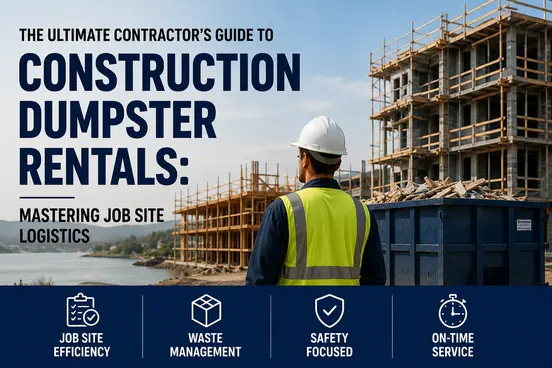
The Ultimate Contractor’s Guide to Construction Dumpster Rentals: Mastering Job Site Logistics
In the highly competitive, incredibly fast-paced commercial construction industry, profit margins are frequently razor-thin, and project timelines are unforgiving. General contractors, specialized tradesmen, and site supervisors spend hundreds of hours meticulously planning architectural blueprints, aggressively negotiating heavy material costs, and carefully coordinating complex labor schedules. Yet, amidst all of this high-level logistical orchestration, one of the most consistently overlooked variables capable of completely derailing a project is the physical management of job site waste. When tons of jagged demolition debris, shattered drywall, and heavy timber begin to aggressively accumulate, the immediate need for a highly reliable construction dumpster rental strategy becomes glaringly obvious.
Failing to proactively establish a heavy-duty waste management protocol does not merely result in an unsightly job site; it initiates a catastrophic chain reaction of hidden costs. Sprawling piles of unmanaged debris instantly create severe OSHA safety hazards, drastically increasing the statistical likelihood of expensive worker's compensation claims due to trips, falls, and puncture wounds. Furthermore, when critical access pathways are blocked by mountains of trash, massive material deliveries cannot be successfully unloaded, heavy machinery like telehandlers cannot safely maneuver, and highly paid, skilled laborers are forced to completely stop their specialized work just to awkwardly move garbage out of their way. This massive drain on labor efficiency is one of the fastest ways to destroy a carefully calculated construction budget.
This highly extensive, deep-dive guide is engineered explicitly for construction professionals, project managers, and ambitious builders. We will thoroughly explore the unique, incredibly demanding nature of construction and demolition (C&D) waste, mathematically break down exactly how to budget for waste disposal during the initial bidding process, and completely demystify the critical logistics of container sizing, strategic site placement, and rapid swap-outs. By mastering the complex intricacies of construction roll-off logistics, you fiercely protect your profit margins, ensure strict regulatory compliance, and guarantee your job site remains a highly efficient, perfectly safe environment from groundbreaking to final inspection.
The Unique Beast: Understanding Construction and Demolition (C&D) Debris
Managing construction waste requires an entirely different operational playbook than standard commercial or residential waste. C&D debris is characterized by three brutal factors: extreme physical volume, highly variable and incredibly dense weight, and strict environmental regulations regarding its disposal.
The Density Dilemma: Volume vs. Weight
In standard residential waste, the primary concern is almost always volume—how much physical space the trash takes up. In the construction world, the primary enemy is extreme density. The materials utilized daily on a job site—such as poured concrete foundation remnants, solid red brick, heavy steel rebar, thick asphalt roofing shingles, and wet excavated dirt—possess a staggering weight-to-volume ratio. A single cubic yard of solid concrete can easily weigh over 4,000 pounds. If a contractor attempts to treat concrete the same way they treat lightweight framing lumber, they will instantly trigger catastrophic weight overage fees and massively violate federal Department of Transportation (DOT) highway weight limits.
The Dynamic Nature of the Waste Stream
Construction waste is not a static entity; the exact type of debris being generated shifts violently depending entirely on the specific phase of the build. The initial demolition phase produces massive volumes of heavy, shattered, completely mixed debris. The framing phase generates high volumes of incredibly long, awkward, but relatively lightweight lumber offcuts. The finishing phase produces miles of tangled electrical wire, empty paint buckets, highly bulky cardboard packaging from new appliances, and thousands of pounds of drywall scraps. A highly effective construction dumpster strategy actively anticipates these massive shifts and pivots the container sizing accordingly.
Strategic Container Sizing for Every Phase of the Build
Because the nature of your debris is constantly evolving, relying on a single, one-size-fits-all dumpster for an entire six-month project is a massive logistical error. Savvy project managers strategically deploy different sizes of roll-off dumpsters specifically tailored to the active phase of construction.
The 10-Yard Dumpster: The "Heavy Haul" Mandate
During the initial site preparation, foundation pouring, or massive hardscaping phases, you are frequently dealing almost exclusively with "inert" materials (dirt, concrete, asphalt, brick). Because these materials are incredibly dense, waste management providers legally mandate that they be strictly confined to heavy-duty 10-yard dumpsters. Attempting to place 30 yards of concrete into a massive container will literally snap the hydraulic winch on the transport truck. The 10-yard bin frequently utilizes a specific "fill line" to ensure the truck remains perfectly compliant with strict DOT axle weight laws. Furthermore, if the concrete or dirt is 100% clean (unmixed with trash), many providers offer highly favorable flat-rate pricing because the material can be aggressively recycled at specialized masonry crushing facilities.
The 20-Yard Dumpster: The Mid-Phase Workhorse
As the project moves into the heavy roofing, flooring, and siding phases, the 20-yard dumpster becomes the undisputed workhorse of the site. It offers a brilliant architectural balance, providing massive capacity for heavy asphalt shingles and torn-up tile flooring, while keeping the side walls low enough (roughly 4 to 4.5 feet) that roofers can easily toss debris directly from the roofline into the container, and ground crews can load heavy materials over the side without requiring a skid steer.
The 30-Yard and 40-Yard Dumpsters: Maximum Volumetric Capacity
During massive commercial interior demolitions, whole-home framing, and the highly chaotic finishing phases, physical volume completely overtakes weight as your primary concern. This is exactly where the massive 30-yard dumpster and the mammoth 40-yard container shine. Featuring towering 6-foot high steel walls, these massive units effortlessly swallow huge volumes of shattered drywall, incredibly long sections of framing timber, miles of PVC piping, and massive amounts of bulky cardboard packaging from new HVAC units and appliances. However, because of the extreme wall height, contractors must actively utilize the heavy-duty swinging rear doors or deploy heavy machinery (like extended telehandlers) to load them efficiently.
Mastering Job Site Logistics: Placement, Workflow, and Swap-Outs
Securing the exact right container size is completely useless if the dumpster is placed in a highly inconvenient location that bottlenecks your entire job site workflow. Executing flawless physical logistics is what separates highly profitable, seasoned contractors from disorganized amateurs.
Strategic Site Placement
The physical placement of the roll-off container dictates the daily efficiency of your entire crew. The dumpster must be placed in a highly accessible location to completely minimize the "travel time" required for laborers to walk debris from the active work zone to the bin. However, it absolutely cannot block critical chokepoints. If the dumpster prevents concrete mixer trucks from safely approaching the foundation, or blocks the massive flatbed trucks delivering your framing lumber, your entire project will grind to a highly expensive halt. Project managers must actively map out the massive "turning radius" required for the roll-off delivery truck to back in, drop the container, and exit the site without destroying newly poured curbs or delicate landscaping.
Executing Flawless "Swap-Outs"
On a massive, highly aggressive commercial build, a 30-yard dumpster can easily be completely filled to the brim in a single afternoon of heavy demolition. When a dumpster is full, work instantly stops. To prevent this highly expensive labor downtime, professional contractors heavily rely on tightly coordinated "swap-outs" (also known in the industry as switch-outs). This highly complex logistical maneuver involves scheduling the waste transport truck to arrive with a completely empty dumpster, drop it seamlessly on a staging area on the site, and immediately hook up and haul away the completely full container in a matter of minutes. Establishing an airtight, highly communicative relationship with a deeply responsive local provider is absolutely mandatory to ensure these swap-outs happen exactly when needed.
Urban Environments and "Live Loads"
If you are executing a massive commercial renovation in a highly congested downtown district (such as the busy streets of Norfolk, Virginia Beach, or Newport News), leaving a massive steel dumpster on the public street for days is frequently completely illegal or practically impossible due to extreme space constraints. In these highly restrictive urban scenarios, contractors actively utilize a specialized service known as a "live load." The massive commercial truck arrives, drops the dumpster directly onto the street, and the driver physically waits inside the cab. The contractor’s massive crew then aggressively loads the debris as rapidly as possible (usually within a strict 30 to 60-minute window). Once filled, the truck instantly hauls it away, completely bypassing the need for complex, highly expensive municipal street permits.
Budgeting for Waste in Your Construction Bids
A staggering number of contractors lose massive amounts of their profit margin because they completely fail to accurately estimate waste disposal costs during the initial project bidding phase. Treating waste as an afterthought is a guaranteed way to bleed cash.
Calculating Tonnage and Overage Risks
When calculating your bid, you cannot simply look at the flat-rate base price of the dumpster rental. You must aggressively estimate the total physical tonnage of the debris you will be generating. Standard flat-rate rentals include a specific weight allowance (e.g., 3 tons for a 20-yard bin). If your crews are tearing out heavy plaster walls or multiple layers of thick flooring, you will easily shatter that weight limit. Landfill "tipping fees" vary wildly but frequently exceed $60 to $100+ per ton. You must meticulously calculate these potential overage fees and heavily bake them directly into your initial client estimate to fiercely protect your margin.
The Hidden Cost of Water Weight
Roll-off dumpsters are entirely completely open to the elements. If your job site experiences a massive, three-day torrential downpour, highly porous C&D materials inside the container—such as deeply pulverized drywall, massive rolls of insulation, and raw framing lumber—will soak up thousands of pounds of rainwater. The massive scale at the municipal landfill cannot differentiate between heavy debris and heavy water; you will be forced to pay for every single drop. Highly experienced contractors aggressively combat this by factoring the cost of massive, heavy-duty tarps into their budget and strictly mandating that their site supervisors securely cover the dumpsters every single night.
Environmental Compliance, Safety, and LEED Certification
In the modern construction era, massive commercial developers and environmentally conscious homeowners increasingly demand strict adherence to highly aggressive sustainability standards. Waste management is no longer just about disposal; it is deeply intertwined with environmental compliance.
Strictly Prohibited Hazardous Materials
Job site supervisors must ruthlessly enforce a strict zero-tolerance policy regarding the disposal of hazardous materials in standard roll-off containers. Placing liquid paints, industrial solvents, toxic chemical strippers, motor oil, or highly dangerous asbestos-containing materials (ACM) into a standard dumpster poses a massive, catastrophic threat to local groundwater supplies and severely endangers the sanitation workers. Violating these federal environmental laws will result in rejected loads, massive contamination fines, and severe legal liability for the general contractor.
Supporting LEED Certification through Waste Diversion
For massive commercial builds aggressively pursuing LEED (Leadership in Energy and Environmental Design) certification, standard landfill disposal is completely unacceptable. To secure valuable LEED points, a massive percentage of the C&D waste must be actively diverted and recycled. This requires partnering directly with a highly sophisticated commercial waste provider capable of accepting "mixed" C&D loads, running them through massive mechanical sorting facilities to harvest the valuable steel, clean wood, and crushed concrete, and providing highly detailed, legally auditable "waste diversion reports." Without this precise, data-driven reporting, achieving LEED certification is mathematically impossible.
Conclusion: Building a Rock-Solid Logistical Foundation
Successfully managing the massive, highly unpredictable flow of heavy waste on an active construction site is an incredibly demanding logistical challenge that requires aggressive proactive planning, deep industry knowledge, and flawless daily execution. By carefully analyzing your project's unique architectural debris profile, accurately deploying the perfect heavy-duty container sizes for each phase, strictly enforcing OSHA safety and environmental protocols, and mastering the advanced logistics of rapid swap-outs, you completely neutralize one of the absolute largest threats to your project's timeline and your ultimate profitability.
A meticulously clean, highly organized construction site is an inherently safe, drastically more productive environment. It deeply boosts the morale of your skilled tradesmen, fiercely prevents highly expensive injuries, strictly protects your expensive raw materials from damage, and presents a highly professional, deeply impressive image to your clients, investors, and local municipal inspectors. Never allow an unmanaged mountain of heavy debris to dictate the pace of your build.
By choosing to partner with highly experienced, deeply reliable local waste management professionals who intimately understand the extreme, high-stakes demands of the commercial construction industry, you effectively outsource this massive logistical headache. This critical strategic decision allows you, as the project manager or ambitious general contractor, to focus 100% of your valuable energy and expertise entirely on what you do best: executing flawless construction, expertly managing your specialized teams, and bringing complex, beautiful architectural visions into stunning reality.
Are you ready to absolutely streamline waste management on your next massive construction project?
At First Priority Disposal, we specialize in providing heavy-duty, highly reliable construction dumpster rentals engineered specifically to meet the extreme, unforgiving demands of general contractors, commercial builders, and professional project managers across the entire region. Whether you are executing a massive commercial build in Chesapeake, running a large-scale residential development in York County, or requiring highly coordinated live-loads in downtown Hampton, our massive fleet and dedicated dispatch team ensure you have the exact massive capacity you need, exactly when your schedule demands it.
Stop letting terrible waste logistics completely slow down your valuable build and bleed your profit margins. Visit firstprioritydisposal.com/services today to clearly view our highly comprehensive commercial solutions, secure deeply transparent contractor pricing, and rapidly schedule your precise delivery. Let our seasoned local experts handle the massive heavy lifting so you can keep your job site moving forward flawlessly.